

ENG BELOW
Pour cette séance automnale de DOUBLE VISION, nous vous proposons de découvrir trois films-essais iraniens réalisés sur une période de six décennies, qui explorent la façon dont les images portent l'histoire, dont le regard est indissociable du pouvoir, et dont le présent peut se tourner vers les traces laissées par le passé. Le passé ne demeure pas sagement derrière nous. Il persiste dans les objets, les visages et les images ; il est continuellement reconstruit par la manière dont nous le regardons.
Nous dédions cette soirée au peuple iranien, en signe de solidarité, alors que la guerre s'abat à nouveau sur son pays. Leurs images, leur mémoire et leurs voix ne peuvent être ni extraites ni effacées.
Regards passés
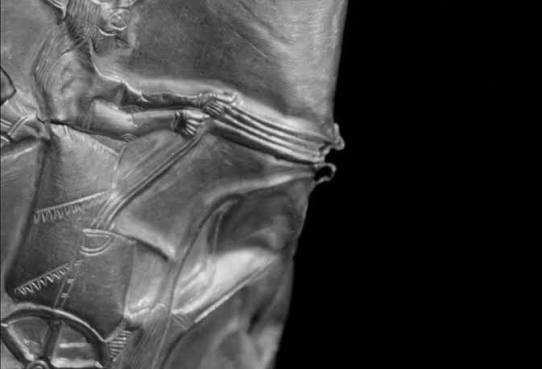
La Coupe de Hasanlu (Jaam-e Hasanlou) de Mohammad Reza Aslani, Iran, 1964, 20 min
En 1958, des archéologues ont mis au jour, à Hasanlu (nord-ouest de l'Iran), une coupe en or gravée de mythes vieux de près de trois millénaires. Dans ce premier film, le cinéaste, poète et peintre Aslani laisse sa caméra glisser sur les figures, dieux, héros et scènes de sacrifice qui l'ornent, construisant un récit inédit et poétique à partir des interstices qui les séparent.
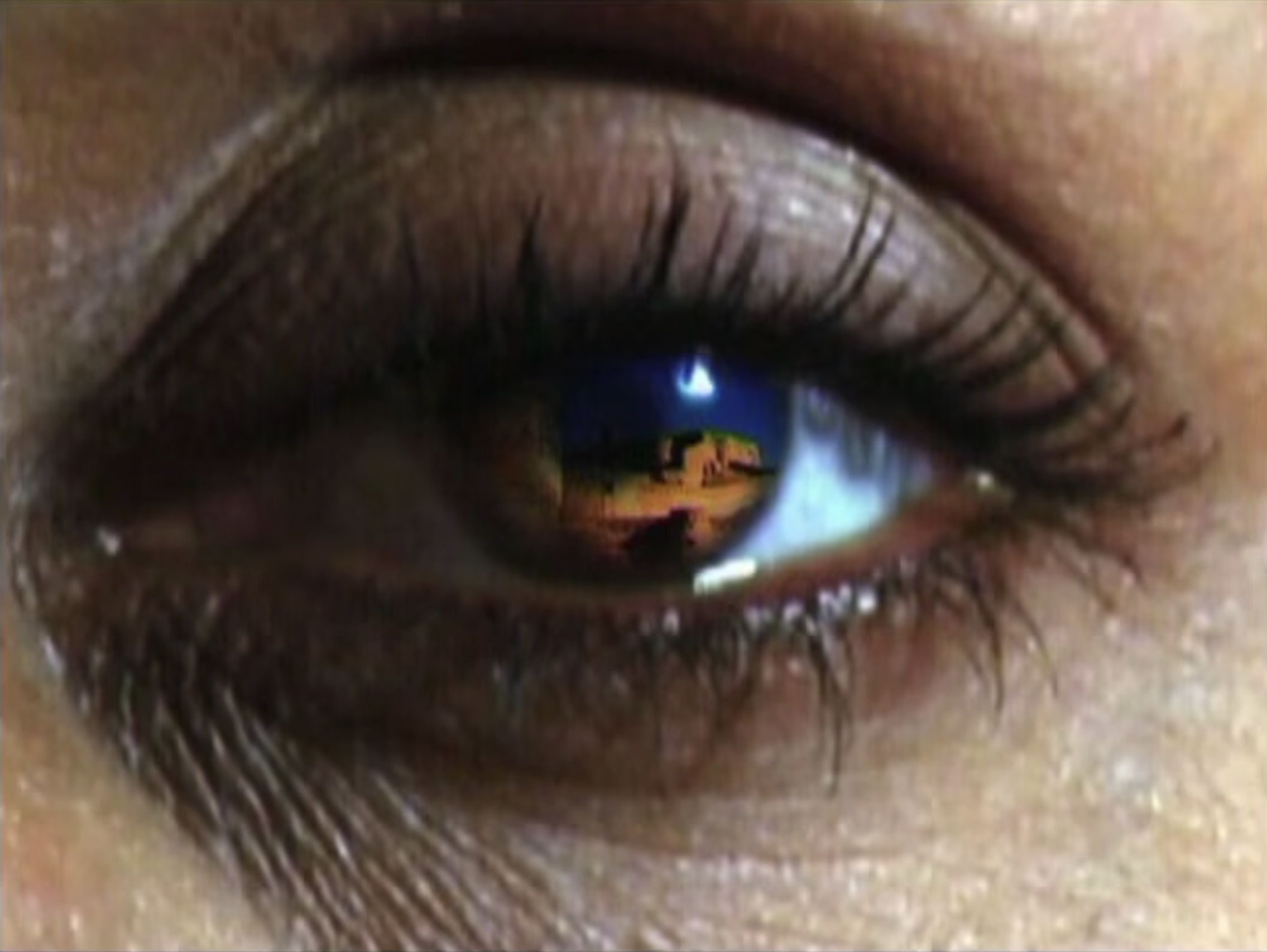
Ton visage dans mes yeux (Your Face in My Eyes) de Simin Keramati, Iran, 2005, 4 min
En décembre 2003, un séisme a détruit la cité antique de Bam, faisant des dizaines de milliers de victimes. Keramati nous guide à travers une ville qui n'existe plus, mais qui survit dans le reflet de la pupille de quelqu'un qui l'a vue autrefois. Le film ouvre une porte entre le passé préservé dans un objet et le passé porté par l'acte même de voir.
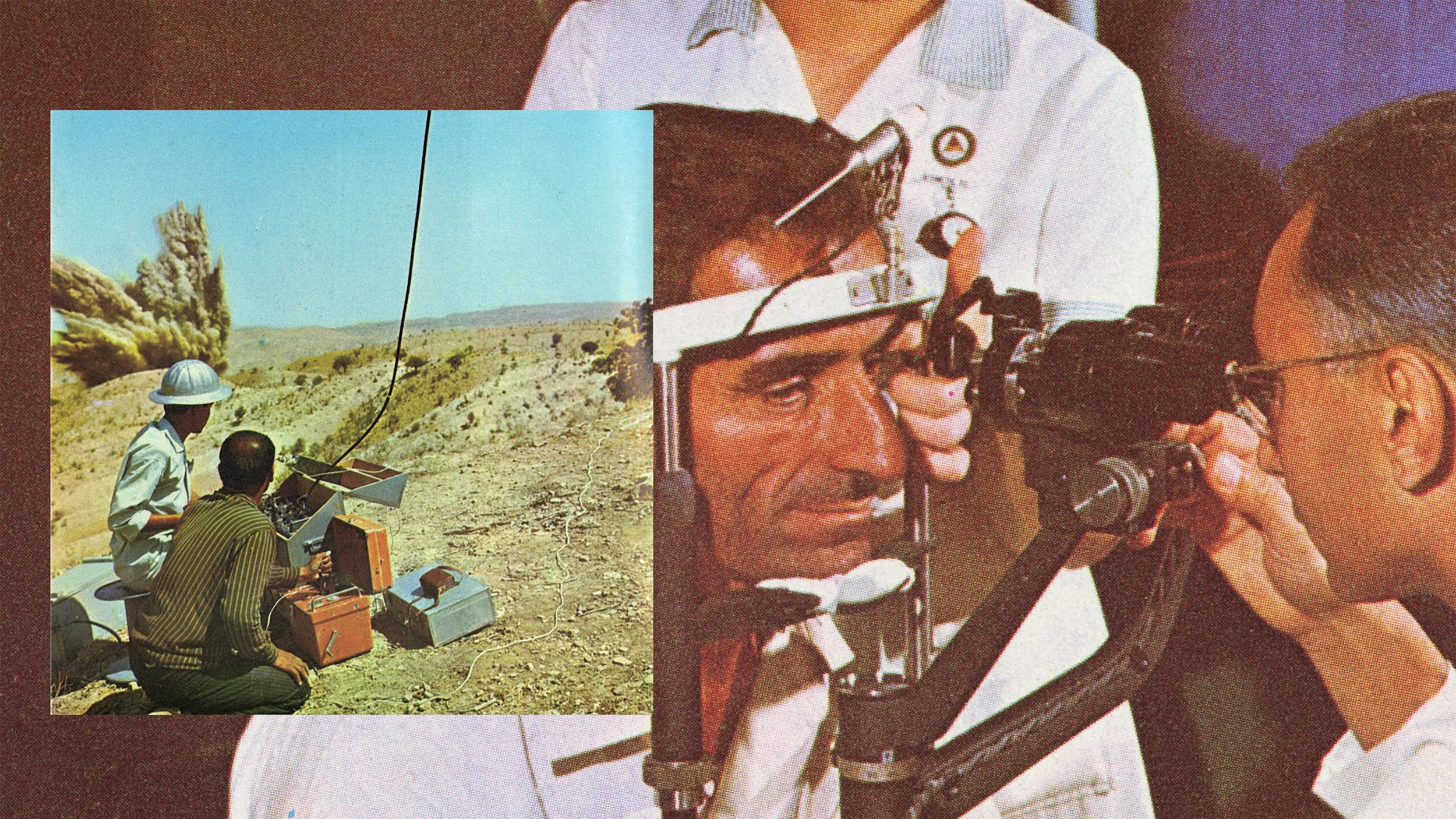
Scènes d'extraction (Sahnehaye estekhraj) de Sanaz Sohrabi, Canada/Iran, 2023, 43 min
Sohrabi explore les archives de British Petroleum, confronte des images géologiques amateurs à des images officielles et transforme d'anciennes vues aériennes en cartes numériques. En retravaillant ce matériau à travers des images d'archives et des projections spéculatives, elle met en lumière l'enchevêtrement entre photographie, pouvoir colonial, exploitation des ressources et dommages écologiques. L'archive est ainsi amenée à révéler ce qu'elle n'avait jamais été conçue pour garder en mémoire. Il s'agit du deuxième volet d'une trilogie consacrée à la photographie et au pétrole en Iran, faisant suite à « One Image, Two Acts » (2020) et précédant « An Incomplete Calendar » (2026), présenté cette année au festival CinePalestine.
Ces trois films ne constituent ni une histoire linéaire ni un portrait unique de l'Iran ; ils forment une constellation de regards distincts : mythique, intime et extractif. Chacun nous invite à repenser non seulement ce que les images montrent, mais aussi la manière dont elles façonnent ce qui peut être connu, mémorisé ou revendiqué.
Ce programme proposé par Laurent Van Lancker, s'inspire librement de l'exposition en cours WHAT THE LAND REMEMBERS — COUNTER-ARCHIVES FROM IRAN, présentée au centre d'art Argos à Bruxelles jusqu'en février 2027.
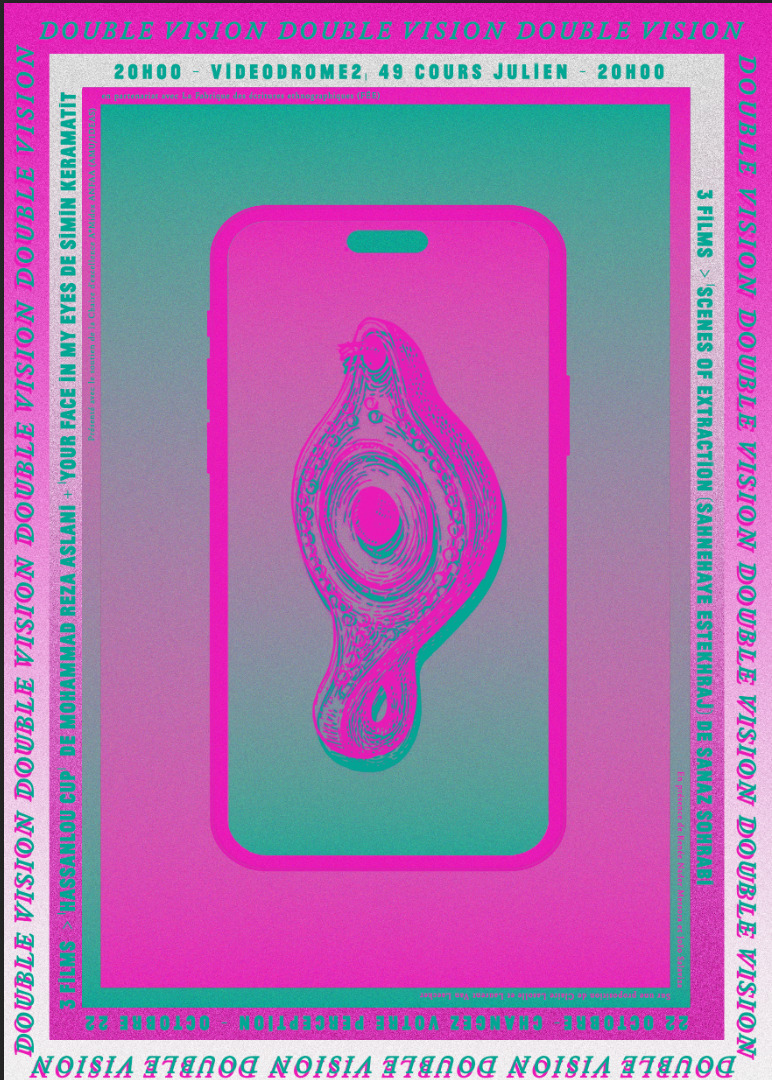
@49 Cours Julien 13006 Marseille
Double Vision – 22nd of October 2026 - 20h30
Past Gazes
The past does not sit quietly behind us. It persists in objects, faces and images; it is continually reconstructed through the ways we look at it. Past Gazes brings together three Iranian essay films made across six decades, exploring how images carry history, how seeing is entangled with power, and how the present might look back at the traces left by the past.
We dedicate this evening to the people of Iran, in solidarity, while war once again falls on their country. Their images, their memory and their voices cannot be extracted or erased.
Hassanlou Cup (Jaam-e Hasanlou) by Mohammad Reza Aslani, Iran, 1964, 20 min
In 1958, archaeologists unearthed a gold cup at Hasanlu, in north-western Iran, engraved with myths almost three millennia old. In his first film, the filmmaker, poet and painter Aslani lets the camera slide across its figures, gods, heroes and sacrifices, and builds a new poetic story out of the gaps between them.
Your Face in My Eyes by Simin Keramati, Iran, 2005, 4 min
In December 2003, an earthquake destroyed the ancient city of Bam and killed tens of thousands of people. Keramati walks us through a city that no longer exists, as it survives reflected in the pupil of someone who once saw it. The film offers a door between the past preserved in an object and the past carried within the act of seeing itself.
Scenes of Extraction (Sahnehaye estekhraj) by Sanaz Sohrabi, Canada/Iran, 2023, 43 min
Sohrabi digs into the British Petroleum archives and sets amateur geological footage against official images, and turns old aerial views into digital maps. By reworking this material through archival and speculative images, Sohrabi reveals the entanglement of photography, colonial power, resource exploitation and ecological damage. The archive is made to disclose what it was never designed to remember. This is the second part of a trilogy on photography and oil in Iran, after One Image, Two Acts (2020) and before An Incomplete Calendar (2026), shown at CinePalestine this year.
Together, these three films form neither a linear history nor a single portrait of Iran. They create a constellation of different gazes: the mythic, the intimate and the extractive. Each asks us to reconsider not only what images show, but how they shape what can be known, remembered or claimed.
This program curated by Laurent Van Lancker is freely inspired by the current exhibition WHAT THE LAND REMEMBERS — COUNTER-ARCHIVES FROM IRAN @ argos arts center in Brussels, and which runs until february 2027.
<O> <O>
DOUBLE VISION
is a call-and-responseis cinema and its echo
is a phenomenon in which the recording of the world is projected back on itself
is a monthly screening series
DOUBLE VISION
is offered in a monthly double bill of programs that take radical, transformative and visionary works of cinema and pair them with their mirror selves. Featuring critical essays, curated film / video programs, visiting international filmmakers and focusing on films drawn from the rich and complicated histor/ies of visual anthropology and experimental cinema, DOUBLE VISION looks to draw an emotional, political, visceral and critical line of influence between what is felt, what is seen, what is known and what can be understood.
BAAB is a unique year-long program designed for artists and researchers working on audiovisual projects at the intersection of art, anthropology, and cinema.
DOUBLE VISION and BAAB
are presented with the support of the ANFAA A*Midex Research Group (AMU/IDEAS)
www.audiovisualanthropology.net
--------